
Berlin Guide
A city that starts late and finishes later, arranged around courtyards, canals and former industry.
Berlin is spread out and best taken district by district: Mitte for museums and grand rooms, Kreuzberg and Neukölln for eating and drinking, Friedrichshain for the clubs that define the city's reputation. Door policies are strict and cash-friendly, Sunday afternoons are legitimate club hours, and most kitchens keep serving late — the U-Bahn runs all night at weekends.
Share this guide
Live from Berlin
Latest news & events
Fresh Berlin stories and events are on the way — check back soon.
Mitte to Kreuzberg, end to end
Illustrated
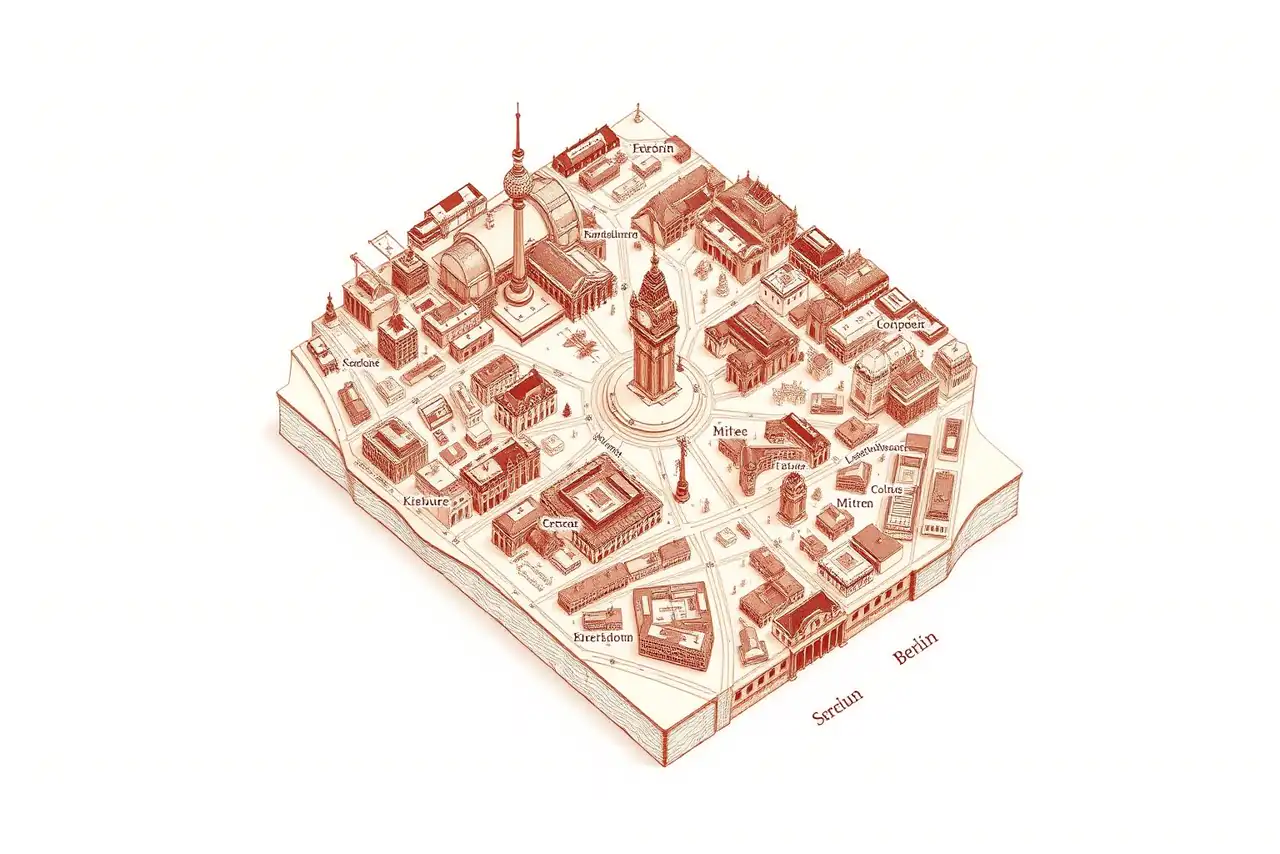
Drawn by hand for the KEY2 Berlin guide
Where to stay
Hotels
The KEY2 list
Happy Hour
Daylight
Hotel Pools & Pool Clubs
Eat
Best Food
Mornings
Breakfast & Brunch

Recover
Health & Wellness
After dark
Nightlife
Arenas
Sports
Tonight
Concerts & Comedy

Say it here
Weddings
Book the room
Event Spaces

Experiences
100 Other Things To Do
Berlin explained
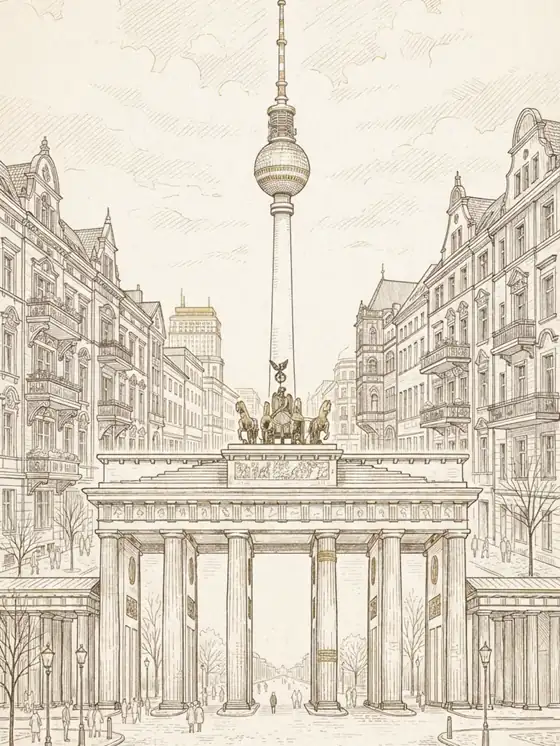
Hour-by-hour plans drawn by hand — pick one and follow it from first coffee to last call.
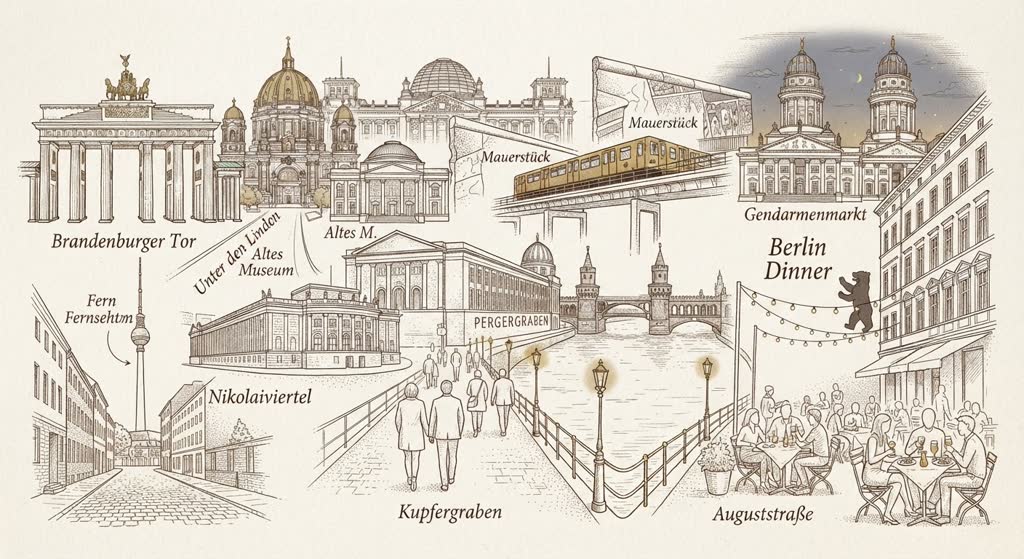
24 Hours in Berlin
A single day covering the historic core, Museum Island, and a proper Berlin dinner.
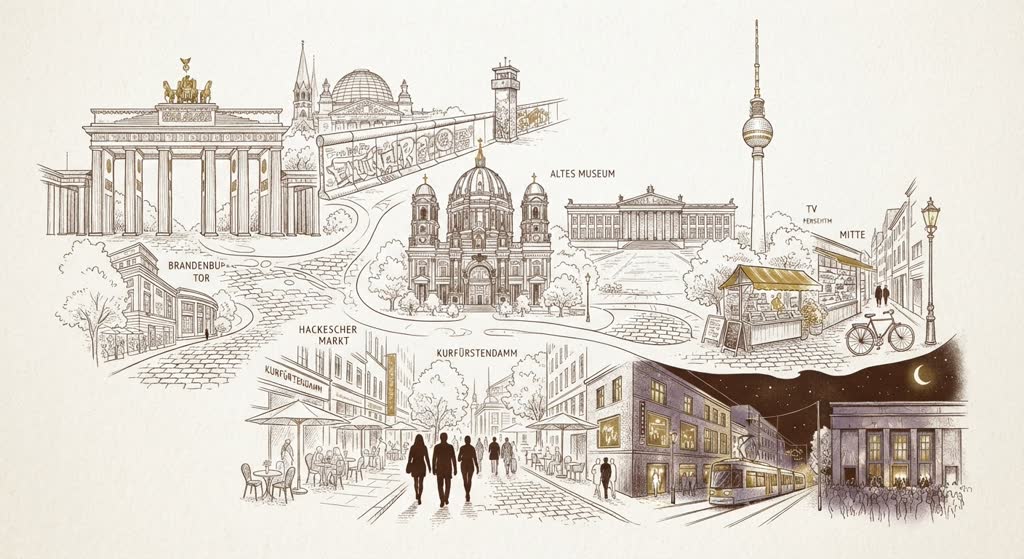
48 Hours in Berlin
Two days pairing Cold War history and Museum Island with Berlin's food halls, shopping and legendary nightlife.
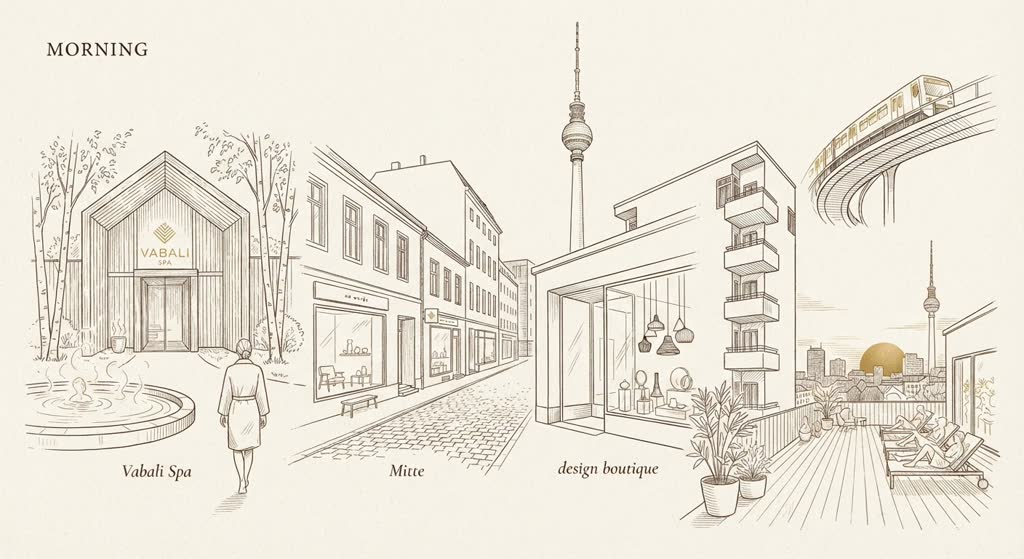
Berlin Wellness & Design Day
A slower-paced day of spas, design shopping and a rooftop sunset for visitors who want a break from history and nightlife.
Berlin travel guide
The practical layer: when to come, how to arrive, how to move, where to base yourself and what it costs.
Best time to visit
May to September gives the longest daylight and beer-garden weather; late September to early October (around the Festival of Lights) offers mild temperatures with thinner crowds than peak summer.
Getting in
Berlin Brandenburg (BER) connects to the centre via the Airport Express (FEX) or S-Bahn/RE trains to Berlin Hauptbahnhof in about 30 minutes for around €4.40 (AB zone ticket); a taxi into Mitte costs roughly €45–55 and takes 30–45 minutes in traffic.
Getting around
The combined U-Bahn, S-Bahn, tram and bus network (run by BVG) covers the sprawling city well and a single ticket at €3.20 works across all modes within a zone for two hours; validate paper tickets before boarding, as inspectors do check. The city is flat and very bike-friendly, with rental docks throughout, while distances between districts like Mitte and Kreuzberg are often better covered by transit than on foot.
What it costs
Mid-range hotel doubles run €110–180 a night; dinner for two at a solid restaurant is €50–80; a single BVG transit ticket is €3.20 and a short taxi hop is roughly €10–15.
Where to stay
- Mitte
- Central and historic, walkable to Museum Island and the Brandenburg Gate, with a dense hotel selection.
- Kreuzberg
- Alternative, food- and nightlife-heavy district along the Landwehr canal, popular with younger travellers.
- Prenzlauer Berg
- Leafy, gentrified former East Berlin quarter with cafés and boutiques, good for families and longer stays.
- Charlottenburg
- Quieter, upscale west-side neighbourhood near Zoologischer Garten, well connected by S-Bahn.
Traveller tips
- Clubs like Berghain famously reject entry at the door with no explanation — dress plainly and avoid large groups.
- Sundays close almost all supermarkets and shops by law, though bakeries, some Späti kiosks and restaurants stay open.
- Cash is still preferred at many small restaurants, bars and markets, despite growing card acceptance.
- Tipping around 5–10% by rounding up and telling the server the total (not left on the table) is customary.
- Jaywalking against a red pedestrian light (Ampelmann) is frowned upon and can draw a fine, even on empty streets.
- Plugs are the two-round-pin Europlug (Type C/F) at 230V, so UK and US visitors need an adapter.
The Berlin calendar
The dates that actually move prices, crowds and opening hours.
February
Berlinale
The film festival takes over mid-February; central hotels fill and tickets go fast.
May
Karneval der Kulturen & Gallery Weekend
Street parade in Kreuzberg plus the year's biggest art openings across the city.
June
Fête de la Musique & open-air season
Free concerts on 21 June; beer gardens and open-air floors run until autumn.
July
Christopher Street Day
Berlin Pride fills Tiergarten and Schöneberg; club programming runs all weekend.
September
Berlin Marathon & Musikfest
Road closures across the centre on marathon Sunday; classical season opens.
December
Christmas markets & Silvester
Gendarmenmarkt and Kulturbrauerei markets, then a citywide New Year's Eve.
Seasonal highlights
- Spring (Apr–Jun)
- Canal-side terraces reopen and the art calendar peaks; the most pleasant stretch of the year.
- Summer (Jul–Aug)
- Long light, lake trips, open-air floors — busy but never as crowded as Paris or Rome.
- Autumn (Sep–Oct)
- Crisp, cultural and good value once the marathon weekend has passed.
- Winter (Nov–Mar)
- Dark and cold, which is when the clubs, saunas and long dinners are at their best.
Off-peak intel
- January, February (outside Berlinale) and November are the cheapest weeks in the city.
- Clubs peak between 02:00 and 08:00 — arrive after midnight, bring cash, no photos inside.
- Stay in Neukölln or Friedrichshain for lower rates and better late-night walking distance.
- Many museums are free or reduced in the last opening hours; check Museum Island timings.