
Barcelona Guide
A Mediterranean grid of Gaudí spires, market counters and a beach the city never turns its back on.
Barcelona reads as two cities stitched together: the tight medieval lanes of the Gothic Quarter and Born, and the ruler-straight Eixample grid Cerdà laid out around them. Kitchens run late by northern-European standards and close hard between lunch and dinner, and August empties whole neighbourhoods as locals head to the coast or the Pyrenees.
Share this guide
Live from Barcelona
Latest news & events
Fresh Barcelona stories and events are on the way — check back soon.
Eixample to Barceloneta, end to end
Illustrated
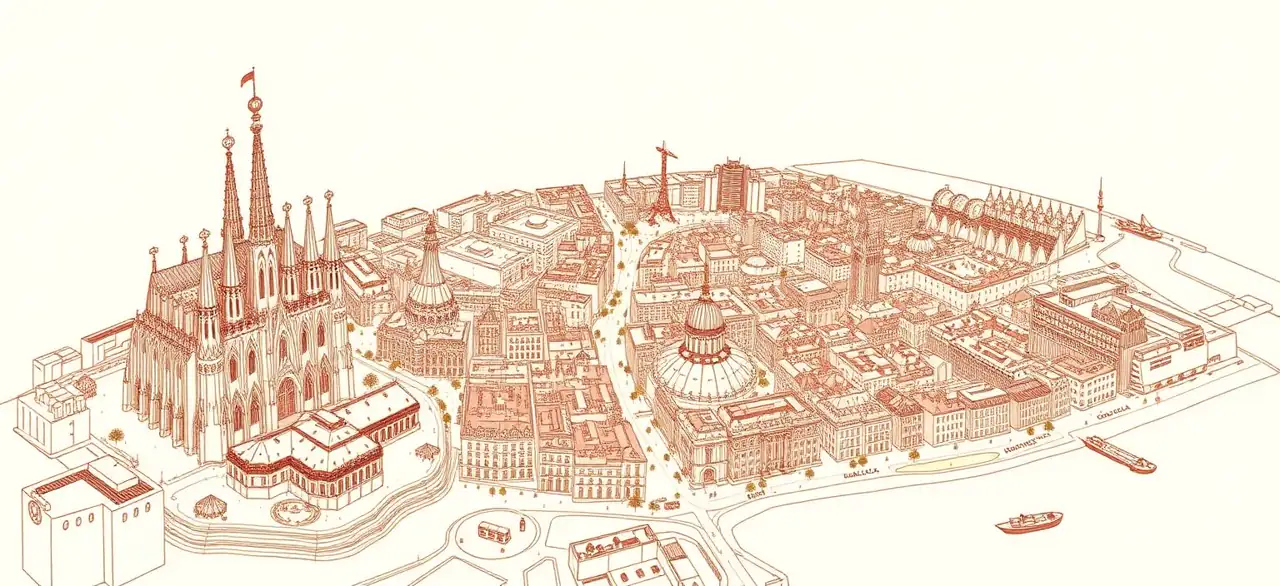
Drawn by hand for the KEY2 Barcelona guide
Where to stay
Hotels
The KEY2 list
Happy Hour
Daylight
Hotel Pools & Pool Clubs
Eat
Best Food
Mornings
Breakfast & Brunch
Recover
Health & Wellness
After dark
Nightlife
Arenas
Sports

Tonight
Concerts & Comedy

Say it here
Weddings
Book the room
Event Spaces

Experiences
100 Other Things To Do
Barcelona explained
Hour-by-hour plans drawn by hand — pick one and follow it from first coffee to last call.
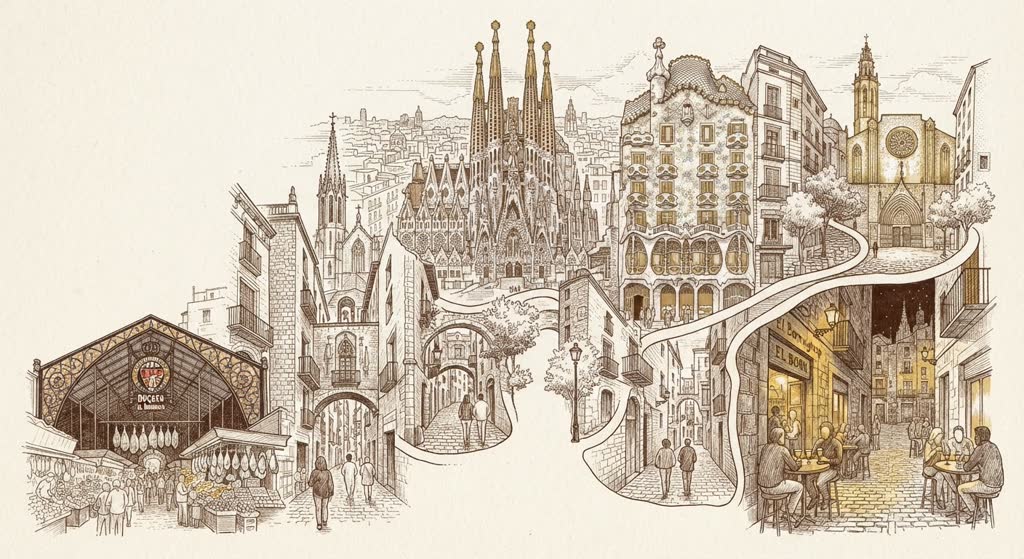
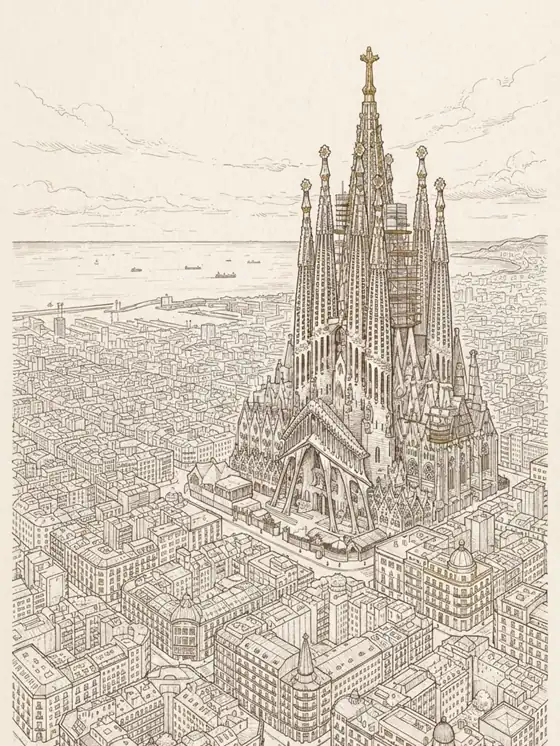
24 Hours in Barcelona
A single dense day through the Boqueria, Gaudí's two great landmarks and a Born nightcap.
48 Hours in Barcelona
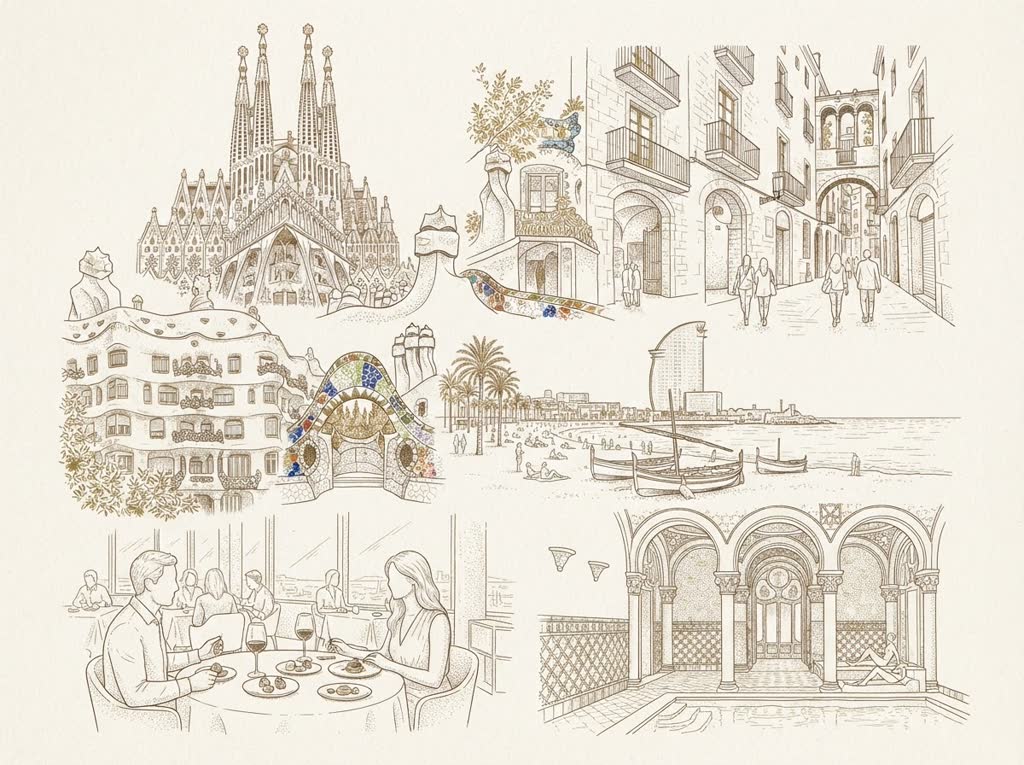
Two days spanning Modernisme, the Barceloneta shoreline, tasting-menu dining and a spa morning.
Barcelona travel guide
The practical layer: when to come, how to arrive, how to move, where to base yourself and what it costs.
Best time to visit
May, June and September deliver warm, dry days and sea-swimmable temperatures without the peak-July heat and crowds; late September also brings La Mercè festival without August's tourist saturation.
Getting in
El Prat Airport (BCN) connects to the centre via the Aerobús (about 35 minutes to Plaça Catalunya, €6.75 one way) or the R2 Nord train to Passeig de Gràcia (around 20 minutes, €4.60); a taxi to the centre costs roughly €35–40 and takes 20–30 minutes depending on traffic.
Getting around
The Metro is extensive and cheap (a T-Casual 10-trip card costs around €12), and the Eixample grid and old town are highly walkable. Bicing bike-share is popular with residents but requires a local phone number to register; visitors rely mostly on the metro, buses and short taxi or Cabify hops.
What it costs
A mid-range hotel runs €130–220 a night in shoulder season, more in July–August; dinner for two at a solid tapas restaurant costs €50–80; a metro single fare is €2.55 and a short taxi ride across the centre is around €10–15.
Where to stay
- Eixample
- Central, grid-planned and close to Gaudí sights like Casa Batlló, with good metro access.
- Gràcia
- Village-like squares and independent bars, a favourite for longer, quieter stays a short walk from the centre.
- El Born
- Medieval lanes, tapas bars and boutique shops next to the Gothic Quarter, though busy with tourists.
- Barceloneta
- Beachfront base for sea access and seafood restaurants, livelier and louder in summer.
Traveller tips
- Book Sagrada Família and Park Güell tickets online well ahead — both regularly sell out days in advance.
- Dinner starts late, typically 9pm or later; restaurants filling up at 8pm are usually tourist-oriented.
- Watch belongings on Las Ramblas and the metro, where pickpocketing is a known issue.
- A 5–10% tip is appreciated but not expected, unlike in the US.
- Many shops close for a midday break outside the main tourist streets, particularly in August.
- Plugs are the standard European two-pin type.
The Barcelona calendar
The dates that actually move prices, crowds and opening hours.
February/March
Santa Eulàlia festival
Winter patron-saint festival with human towers (castells) and fire runs through the Gothic Quarter.
April
Sant Jordi, 23 April
Barcelona's Valentine's Day and World Book Day combined — Las Ramblas fills with book and rose stalls.
May/June
Primavera Sound
One of Europe's biggest music festivals takes over the Parc del Fòrum for a long weekend; hotels sell out citywide.
June
Sónar
The city's electronic music and creativity festival runs day and night venues in mid-June.
August
Ferragosto-style closures
Many family-run restaurants shut for two to three weeks; the beach neighbourhoods stay busy regardless.
September
La Mercè
The city's biggest street festival in late September — fire runs (correfocs), castells and free concerts across every district.
Seasonal highlights
- Spring (Mar–May)
- Mild, blooming and increasingly busy — Sant Jordi and Easter week both bring crowds.
- Summer (Jun–Aug)
- Hot and humid with a packed festival calendar; beaches and rooftop bars run at full capacity.
- Autumn (Sep–Nov)
- The best all-round window — La Mercè energy in September, warm sea, thinner queues by October.
- Winter (Dec–Feb)
- Mild and quiet, with the cheapest hotel rates and the calmest Sagrada Família visits of the year.
Off-peak intel
- January and February bring the softest hotel rates and short queues at the Sagrada Família and Park Güell.
- Book Sagrada Família and Park Güell timed tickets online well ahead — same-day entry is rarely available in season.
- Many family-run restaurants close for two to three weeks in August; check ahead rather than assuming a favourite is open.
- Vermut hour, roughly 1:00pm to 3:00pm, is when local bars are at their most authentic and least touristed.