
Venice Guide
A city with no roads, where the vaporetto timetable and the tide both shape the day.
Venice rewards arriving without a fixed plan for the middle hours: the set-piece sights sit on the San Marco to Rialto axis, but the better bacari and quieter campi are a ten-minute walk away from it in Cannaregio, Castello or Dorsoduro. Acqua alta can flood St Mark's Square between autumn and early spring, and day-trippers now pay a separate access contribution on the busiest spring and summer days, so check both before you travel.
Share this guide
Live from Venice
Latest news & events
Fresh Venice stories and events are on the way — check back soon.
San Marco to the lagoon islands, end to end
Illustrated
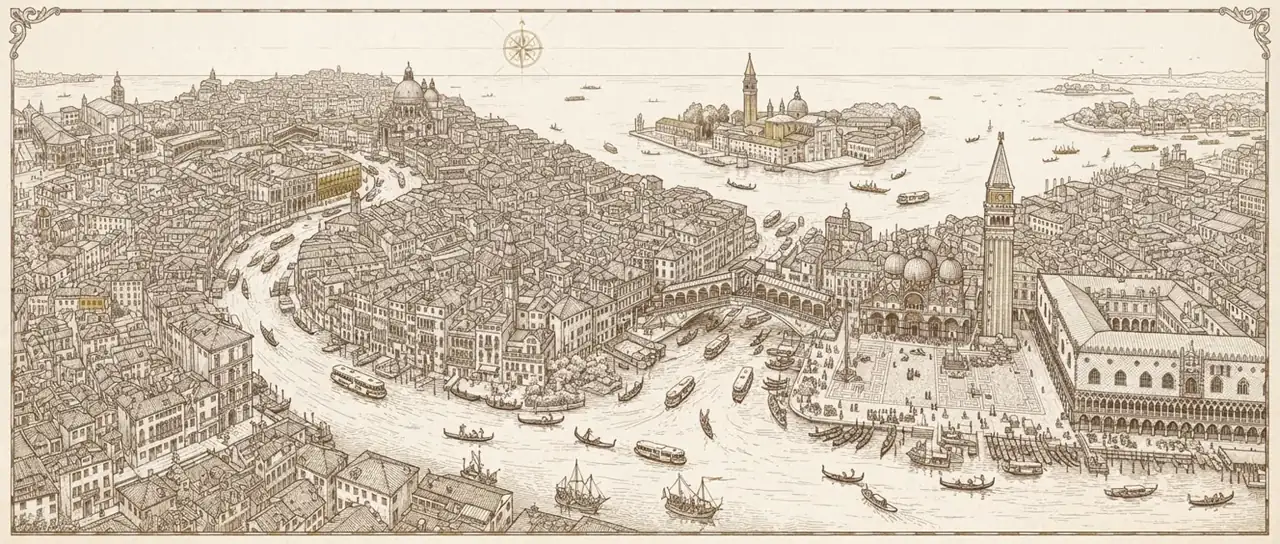
Drawn by hand for the KEY2 Venice guide

Where to stay
Hotels
The KEY2 list
Happy Hour
Daylight
Hotel Pools & Pool Clubs
Eat
Best Food
Mornings
Breakfast & Brunch

Recover
Health & Wellness
After dark
Nightlife
Arenas
Sports

Tonight
Concerts & Comedy

Say it here
Weddings
Book the room
Event Spaces

Experiences
100 Other Things To Do
Venice explained
Hour-by-hour plans drawn by hand — pick one and follow it from first coffee to last call.
24 Hours in Venice
A tight loop through St Mark's, a bacaro lunch and the Grand Canal after dark.
48 Hours in Venice
Two days balancing the main sights with Murano glass, a spa morning and quieter Castello streets.
Venice travel guide
The practical layer: when to come, how to arrive, how to move, where to base yourself and what it costs.
Best time to visit
Late April to early June and September to October offer the mildest weather with thinner crowds than peak summer; December and January are cold but calm, aside from Carnevale week.
Getting in
Venice Marco Polo Airport (VCE) connects to the city by the Alilaguna water bus (around €15, 60–90 minutes to San Marco) or a land bus to Piazzale Roma (around €10, 20 minutes) followed by a vaporetto or walk. A private water taxi runs €100–130 but is the fastest door-to-door option.
Getting around
There are no cars or bikes in the historic centre, so movement is entirely on foot or by vaporetto (public waterbus); a multi-day vaporetto pass is worth it if you are island-hopping to Murano or Burano. Expect steep bridge steps throughout and budget more walking time than a map suggests.
What it costs
A mid-range hotel runs €200–350 a night in peak season; dinner for two at a good trattoria costs €70–110; a single vaporetto ticket is €9.50, though multi-day passes bring the per-ride cost down considerably.
Where to stay
- San Marco
- The most central base, walking distance to the main sights, but also the most expensive and crowded by day.
- Cannaregio
- A quieter, more residential district with strong bacari, good value and easy access to the station.
- Dorsoduro
- An arty, university-adjacent area near the Accademia and Peggy Guggenheim Collection.
- Castello
- Roomier and less touristy east of San Marco, with a genuine local feel along the Riva.
Traveller tips
- Buy vaporetto tickets or a multi-day pass before boarding; inspectors fine undocumented riders on the spot.
- Day-trippers may need to book and pay an access contribution online in advance on the busiest spring and summer dates.
- Acqua alta flooding is most likely between October and January; pack collapsible waterproof boot covers if travelling then.
- Restaurants near St Mark's and the Rialto are priced for tourists; walk a few streets further into Cannaregio or Castello for better value.
- Wear comfortable, flat shoes — the city is entirely bridges, steps and uneven stone underfoot.
- Book gondola rides directly at a stazio rather than through a hotel concierge to avoid a marked-up commission.
The Venice calendar
The dates that actually move prices, crowds and opening hours.
February
Carnevale di Venezia
Ten days of masked balls and costumed crowds across the city; hotel rates and mask-shop queues both peak.
April
Festa di San Marco
The city's patron saint's day on 25 April, marked with a modest local rose-giving tradition (the bocolo).
May
Vogalonga
A non-competitive 30km rowing regatta through the lagoon that briefly closes the Grand Canal to motor traffic.
July
Festa del Redentore
A mid-July weekend of fireworks over the Giudecca Canal and a temporary pontoon bridge to the Redentore church.
September
Historical Regatta
A costumed procession of period boats down the Grand Canal followed by gondola races.
August–September
Venice Film Festival
The Lido fills with press and premieres; city-centre restaurants see a smaller but real spillover crowd.
Seasonal highlights
- Spring (Mar–May)
- Mild, occasionally rainy, with the clearest light for photographs before the summer crowds build.
- Summer (Jun–Aug)
- Hot, humid and the busiest months; queues at the Doge's Palace and St Mark's start early.
- Autumn (Sep–Nov)
- Warm sea, thinner crowds after September, but the start of the acqua alta flood season.
- Winter (Dec–Feb)
- Cold, quiet and atmospheric outside Carnevale week, with the best rates of the year.
Off-peak intel
- Visit the Rialto Market and Doge's Palace before 9am to get ahead of the cruise-excursion groups.
- Weekday travel outside Carnevale and Film Festival weeks avoids most of the access-contribution days.
- November through January brings acqua alta risk but also empty campi and the lowest hotel rates of the year.
- Book the Peggy Guggenheim Collection and Doge's Palace timed-entry tickets online to skip the ticket-office queue entirely.