
Rome Guide
A city of layered centuries where lunch is the main event and the walk home passes two thousand years.
Rome is compact enough to cross on foot but hot enough in summer to make that a bad idea after 11:00am. Ruins need timed tickets; trattorie need a phone call. Sunday and Monday closures catch out more visitors than anything else here.
Share this guide
Live from Rome
Latest news & events
Fresh Rome stories and events are on the way — check back soon.
Ancient centre to the Vatican, end to end
Illustrated
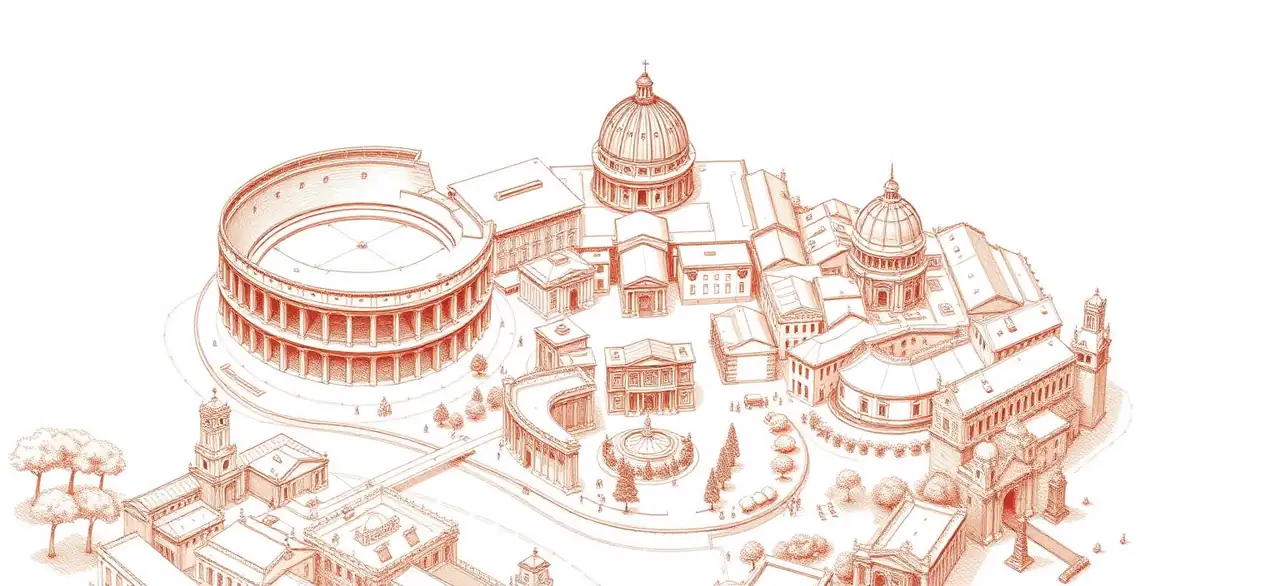
Drawn by hand for the KEY2 Rome guide
Where to stay
Hotels
The KEY2 list
Happy Hour
Daylight
Hotel Pools & Pool Clubs
Eat
Best Food
Mornings
Breakfast & Brunch
Recover
Health & Wellness
After dark
Nightlife
Arenas
Sports
Tonight
Concerts & Comedy
Say it here
Weddings
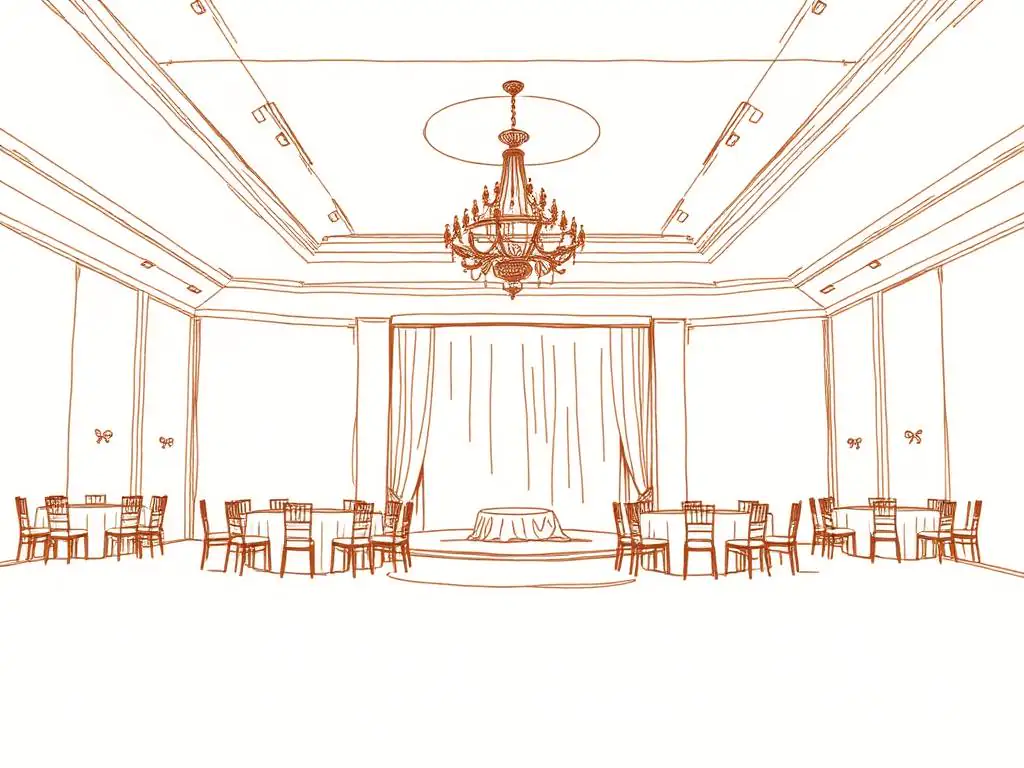
Book the room
Event Spaces

Experiences
100 Other Things To Do
Rome explained
Hour-by-hour plans drawn by hand — pick one and follow it from first coffee to last call.
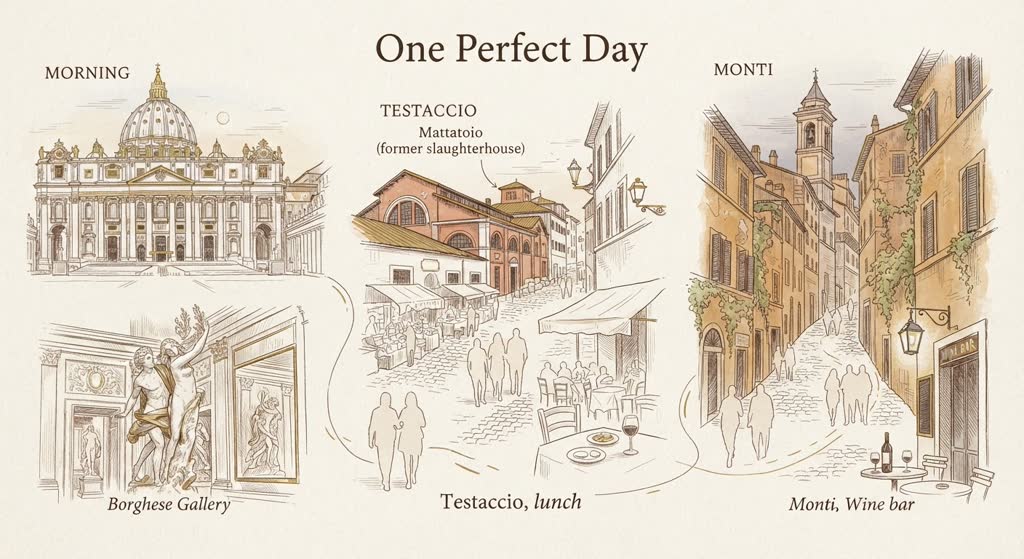
One Perfect Day in Rome
Bernini at opening, Testaccio for lunch, Monti for the last drink.
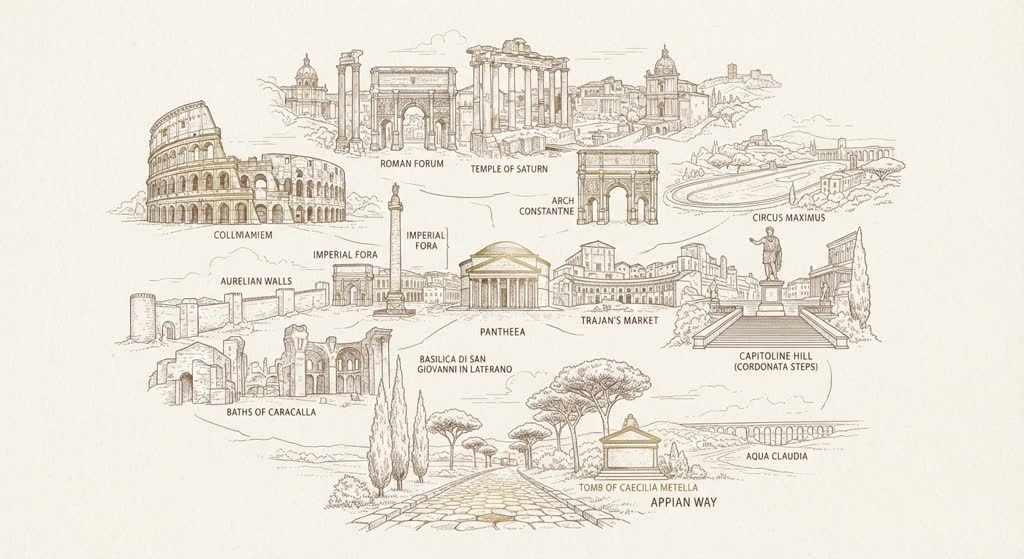
Rome, Ancient to Modern
Three days that move outward from the Forum to the Appian Way.
Rome travel guide
The practical layer: when to come, how to arrive, how to move, where to base yourself and what it costs.
Best time to visit
April to June and September to October offer warm but not scorching days and thinner crowds at the Colosseum and Vatican than the intense heat and tourist volume of July and August.
Getting in
Fiumicino (FCO) connects to Termini station via the Leonardo Express train (€14, 32 minutes) or slower regional trains (around €8); Ciampino (CIA) is served by shuttle buses to Termini (around €6, 40 minutes). A taxi from Fiumicino to the centre is a fixed rate of €55, from Ciampino around €35–40.
Getting around
Rome's small Metro (two main lines, A and B) misses much of the historic centre, so buses and walking fill the gaps — a single ATAC ticket (€1.50) covers 100 minutes across metro, bus and tram. The centro storico is compact and cobbled, best explored on foot in comfortable shoes; taxis must be hailed from ranks or booked by phone rather than flagged on the street.
What it costs
Mid-range hotel doubles run €140–220 a night; dinner for two at a trattoria is €60–90; a single ATAC transit ticket is €1.50, and a short taxi hop is €12–18 (metered, minimum fare applies).
Where to stay
- Centro Storico
- Walking distance to the Pantheon and Piazza Navona, atmospheric but noisy and pricier.
- Trastevere
- Cobbled, ivy-clad streets across the Tiber, strong for nightlife and trattorias, a bus or long walk from major sights.
- Monti
- Bohemian district near the Colosseum with vintage shops and quieter evenings than the centro storico.
- Prati
- Residential, well-heeled area near the Vatican and Castel Sant'Angelo, good value with easy Metro access.
Traveller tips
- Book timed-entry tickets for the Colosseum, Roman Forum and Vatican Museums well ahead to skip hours-long queues.
- A cover charge (coperto) of €2–4 per person is standard and legal at most restaurants, separate from any service charge.
- Cappuccino is a morning drink only in local custom — ordering one after a meal marks you out as a tourist.
- Many shops and churches close for a midday riposo between roughly 1pm and 4pm, especially outside the centre.
- Modest dress (shoulders and knees covered) is enforced at St Peter's Basilica and other churches.
- Plugs are the two-round-pin Europlug (Type C/F/L) at 230V, so UK and US visitors need an adapter.
The Rome calendar
The dates that actually move prices, crowds and opening hours.
April
Natale di Roma, 21 April
The city's birthday: parades in costume through the Circus Maximus and free museum entry.
May
Internazionali d'Italia tennis
Foro Italico fills for two weeks; the Flaminio side of town gets busy.
June
Estate Romana begins
Open-air cinema, concerts in the ruins and riverside bars on the Tiber until September.
July
Ravello-style festival season and the Roman heat
Outdoor opera at the Baths of Caracalla; midday sightseeing becomes unwise.
August
Ferragosto, 15 August
Romans leave, family-run kitchens shut for two weeks, and the centre belongs to visitors.
December
Christmas at St Peter's
Midnight Mass tickets are free but must be requested weeks ahead through the Prefecture.
Seasonal highlights
- Spring (Mar–May)
- Wisteria on the Aventine, ideal walking temperatures, peak visitor numbers at the Vatican.
- Summer (Jun–Aug)
- 35°C+ afternoons; do ruins at opening and dinner at 9:30pm like the locals.
- Autumn (Sep–Nov)
- The best all-round window: warm days, artichoke and porcini season, thinner queues.
- Winter (Dec–Feb)
- Mild and quiet; the Forum and Vatican Museums are as calm as they ever get.
Off-peak intel
- November and late January are the softest weeks for hotel rates and Colosseum tickets.
- Vatican Museums open late on Friday evenings in season — far quieter than any morning slot.
- Book trattorie by phone rather than app; many of the best rooms never list online.
- Many trattorie close Sunday evening and all day Monday; plan those days around hotel dining.