
Mexico City Guide
Twenty-two million people at 2,240 metres, where the best meal of the trip might cost two dollars.
CDMX is organised by colonia, not by address: Roma, Condesa, Juárez, Polanco, Centro and Coyoacán each behave like separate small cities. Altitude is real — take the first day slowly and drink more water than feels necessary. Lunch, not dinner, is the main meal, and it starts around 2:00pm.
Share this guide
Live from Mexico City
Latest news & events
Fresh Mexico City stories and events are on the way — check back soon.
Centro to Condesa, end to end
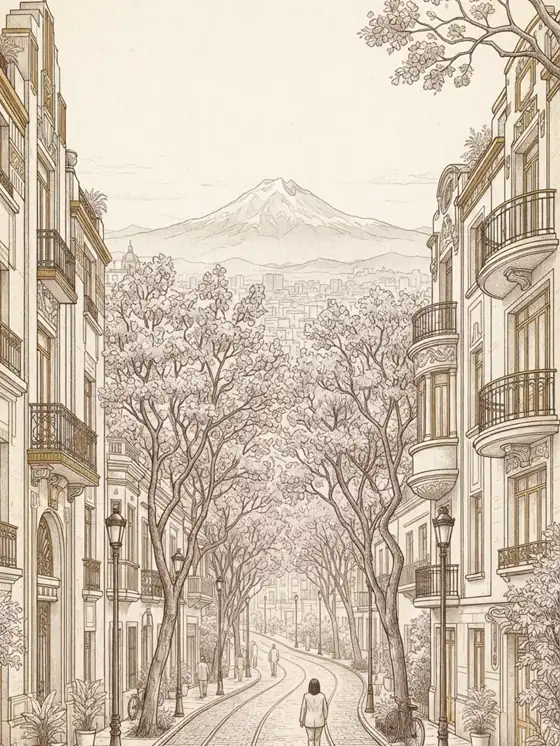
Illustrated

Drawn by hand for the KEY2 Mexico City guide

Where to stay
Hotels
The KEY2 list
Happy Hour

Daylight
Hotel Pools & Pool Clubs

Eat
Best Food

Mornings
Breakfast & Brunch
Recover
Health & Wellness
After dark
Nightlife
Arenas
Sports

Tonight
Concerts & Comedy

Say it here
Weddings
Book the room
Event Spaces

Experiences
100 Other Things To Do
Mexico City explained
Hour-by-hour plans drawn by hand — pick one and follow it from first coffee to last call.
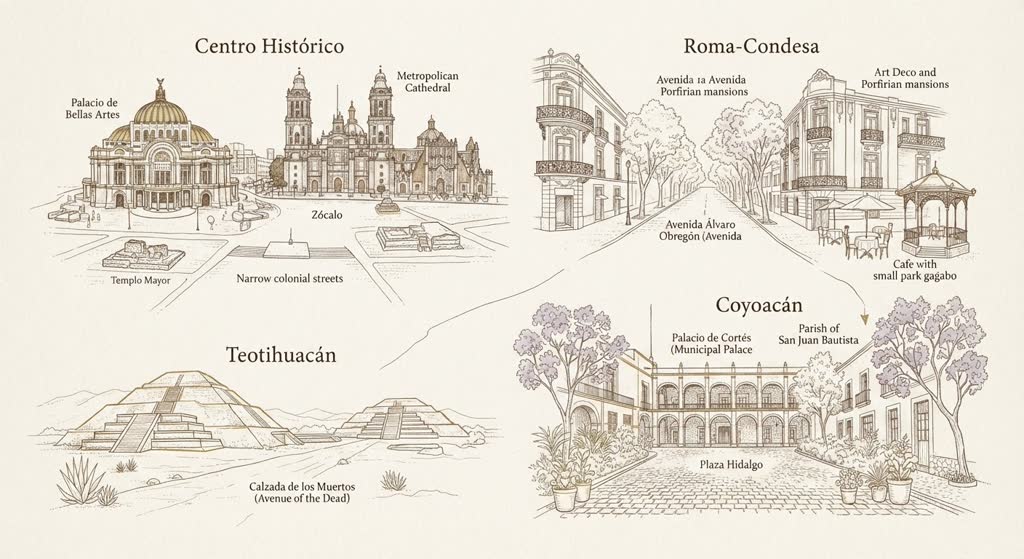
Mexico City in Four Days
Centro, Roma-Condesa, Coyoacán and the pyramids — one neighbourhood at a time.
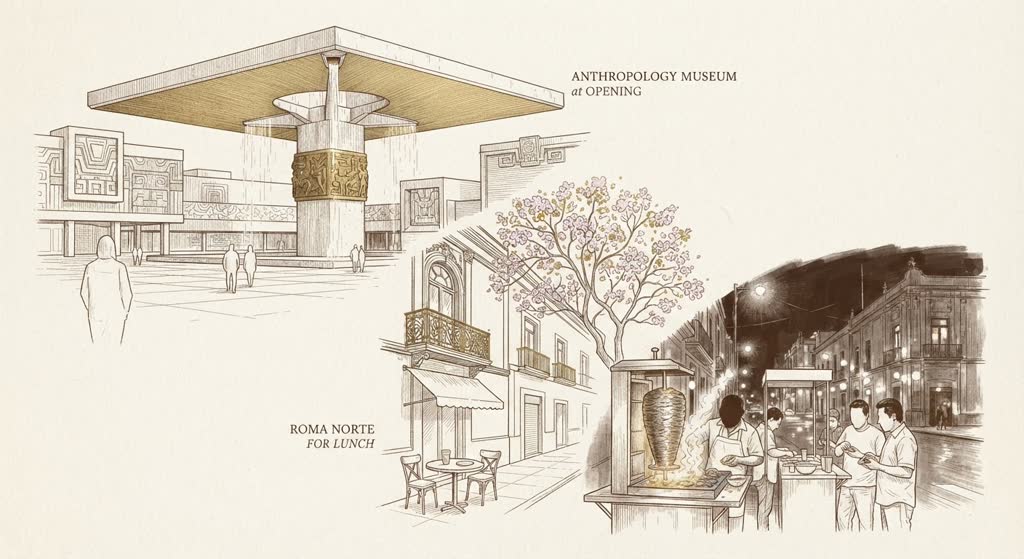
One Perfect Day in Mexico City
Anthropology at opening, Roma for lunch, tacos at midnight.
Mexico City travel guide
The practical layer: when to come, how to arrive, how to move, where to base yourself and what it costs.
Best time to visit
March to May offers warm, dry days before the summer rains and is the sweet spot before the busiest holiday crowds; November is also excellent, with clear skies right after Día de los Muertos.
Getting in
Mexico City International Airport (MEX) sits close to the centre — a Metrobús or authorised airport taxi ("taxi autorizado", bought at a kiosk in arrivals) takes 25–45 minutes to Roma or Condesa depending on traffic, costing roughly MXN 250–350; avoid unmarked cabs touting outside the terminal.
Getting around
The Metro (MXN 5 a ride) is fast and cheap but crowded at rush hour; for most visitors, Uber or Didi is the default after dark and for longer hops, running MXN 60–150 within the centre. Roma, Condesa and Polanco are highly walkable; renting a car is unnecessary and parking is a headache.
What it costs
A mid-range hotel runs MXN 1,800–3,500 a night; dinner for two at a good Roma or Condesa restaurant lands around MXN 900–1,600 with drinks; a short Uber ride within the centre is typically MXN 70–120.
Where to stay
- Roma Norte
- Leafy, café-dense and full of independent design shops; the base for most first-time visitors.
- Condesa
- Art Deco streets around Parque México, quieter than Roma but similarly walkable to restaurants and bars.
- Polanco
- The upscale option near Chapultepec Park, with luxury hotels, embassies and fine dining.
- Centro Histórico
- Closest to the Zócalo and major museums, good for culture-focused stays but noisier at night.
Traveller tips
- Carry small cash for tacos, markets and tipping (10–15% at sit-down restaurants); many street stalls don't take cards.
- Altitude sits at roughly 2,240m, so pace the first day and drink more water than usual.
- Book tables at popular Roma/Condesa restaurants a few days ahead, especially for weekend dinners.
- Use only Uber/Didi or hotel-booked taxis at night rather than hailing cabs on the street.
- Sunday sees Reforma closed to traffic for cyclists and joggers — a good way to see the avenue on foot or by bike.
- Plugs are the same two-flat-pin type as the US, so UK and EU visitors need an adaptor.
The Mexico City calendar
The dates that actually move prices, crowds and opening hours.
March
Jacaranda season & Vive Latino
The whole city turns purple for three weeks; the Foro Sol festival fills eastern hotels.
April
Semana Santa
Chilangos leave for the coast — traffic disappears and museums are calm.
September
Independence Day, 15–16 September
El Grito in the Zócalo, then a military parade; the centre closes to traffic.
October
Formula 1 Mexico City Grand Prix
The busiest, priciest week of the year; book hotels months out.
November
Día de Muertos, 1–2 November
Ofrendas everywhere, plus the enormous downtown parade — the city's best week.
December
Guadalupe pilgrimage, 12 December
Millions walk to the Basilica; northern routes into the city are effectively closed.
Seasonal highlights
- Dry spring (Mar–May)
- Warmest and clearest, jacarandas in March, air quality at its worst in May.
- Rainy season (Jun–Sep)
- Bright mornings, hard afternoon downpours by 5:00pm, greenest parks of the year.
- Autumn (Oct–Nov)
- Clean air, cool evenings and the strongest cultural calendar — the best time to come.
- Winter (Dec–Feb)
- Dry, sunny days and genuinely cold nights; bring a jacket for rooftop dinners.
Off-peak intel
- January and late August are the cheapest, calmest stretches of the year.
- Pujol, Quintonil and Rosetta release tables about a month ahead — set a reminder, not a hope.
- Teotihuacán and Xochimilco are best on a weekday morning; weekends are a different experience entirely.
- Casa Azul and Casa Luis Barragán are timed-entry only and sell out days in advance.