
Lisbon Guide
Seven hillside districts of azulejo tiles, tram lines and a river light that photographs itself.
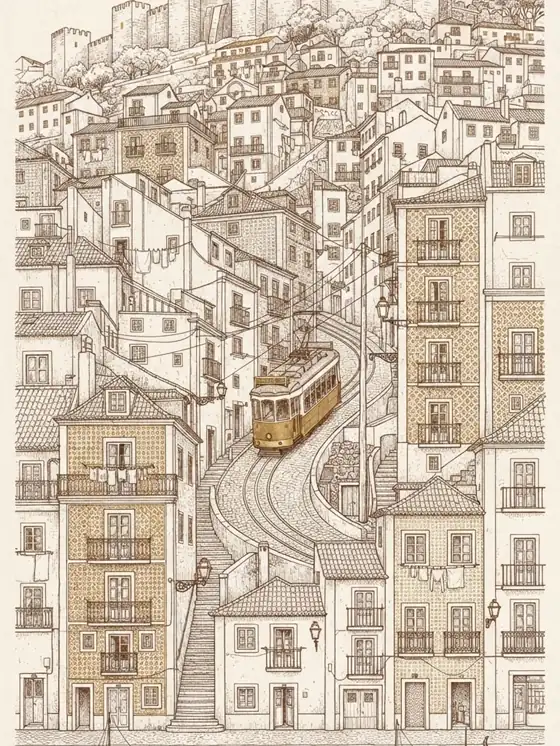
Lisbon is a city of steep hills and miradouros, so plan routes around the funiculars and the number 28 tram rather than a flat walking map. Alfama and Bairro Alto reward wandering without a fixed itinerary, but the cobblestones are uneven and often slick after rain, and the tourist tram routes get seriously overcrowded by mid-morning in summer, so an early start pays off.
Share this guide
Live from Lisbon
Latest news & events
Fresh Lisbon stories and events are on the way — check back soon.
Alfama to Belem, along the Tagus
Illustrated
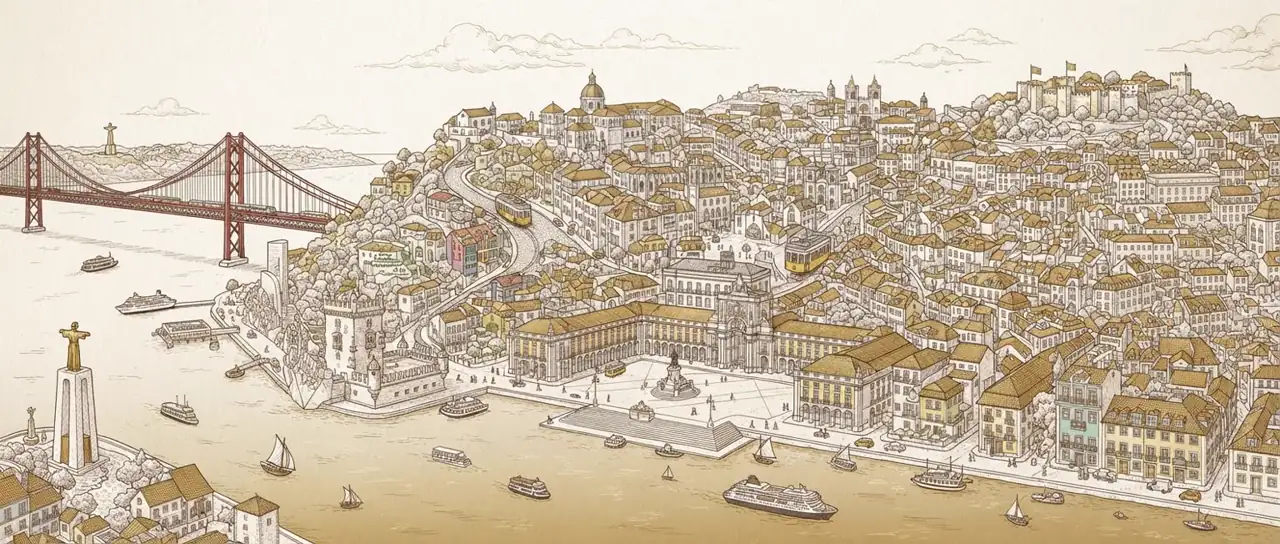
Drawn by hand for the KEY2 Lisbon guide

Where to stay
Hotels
The KEY2 list
Happy Hour

Daylight
Hotel Pools & Pool Clubs

Eat
Best Food

Mornings
Breakfast & Brunch

Recover
Health & Wellness
After dark
Nightlife

Arenas
Sports

Tonight
Concerts & Comedy

Say it here
Weddings
Book the room
Event Spaces

Experiences
100 Other Things To Do
Lisbon explained
Hour-by-hour plans drawn by hand — pick one and follow it from first coffee to last call.
24 Hours in Lisbon
A single tight loop through Belem's monastery, a tram ride and an Alfama fado dinner.
48 Hours in Lisbon
Two days balancing Belem and Alfama with a Sintra day trip and Bairro Alto nightlife.
Lisbon travel guide
The practical layer: when to come, how to arrive, how to move, where to base yourself and what it costs.
Best time to visit
April to June and September to October offer the best balance of mild weather and manageable crowds; July and August are hottest and busiest, while winter is mild but wetter.
Getting in
Humberto Delgado Airport (LIS) sits about 20 minutes from the centre by metro (around €1.65, 25 minutes to Alameda) or taxi/rideshare (€15–20, 20–30 minutes depending on traffic).
Getting around
The metro, trams and funiculars cover most of the city, and a Viva Viagem or Lisboa Card pays for itself quickly if you're using public transport daily. The hills are steep and often mean climbing regardless of route, so comfortable shoes matter more than a fast metro connection.
What it costs
A mid-range hotel runs €120–220 a night in peak season; dinner for two at a good restaurant costs €40–70; a single metro or tram ticket is around €1.65–3.20.
Where to stay
- Baixa
- The flat, grid-planned downtown core, central and convenient but touristy after rebuilding post-1755 earthquake.
- Chiado
- Elegant and central, with the best shopping and a short walk to Bairro Alto's nightlife.
- Alfama
- The oldest district, all narrow lanes and fado houses, atmospheric but hilly and less convenient for luggage.
- Principe Real
- A leafy, boutique-heavy neighbourhood popular with a younger, design-conscious crowd.
Traveller tips
- Buy a rechargeable Viva Viagem card at any metro station rather than paying cash fares on trams, which cost more.
- The number 28 tram is a well-known target for pickpockets; keep bags zipped and to the front.
- Restaurants in Baixa and along the main tram routes are priced for tourists; walk a few streets into Alfama or Graca for better value.
- Book a table for Cervejaria Ramiro or expect a genuine queue — it doesn't take reservations for smaller groups.
- Wear flat, grippy shoes — the calcada portuguesa cobblestones are famously slippery when wet.
- Sunset from a miradouro (viewpoint) like Senhora do Monte is free and usually less crowded than the famous ones near Alfama.
The Lisbon calendar
The dates that actually move prices, crowds and opening hours.
February–March
Carnival
Parades and street parties take over several neighbourhoods in the run-up to Lent.
June
Festas de Lisboa (Santos Populares)
A month-long street-party season peaking on 12–13 June with grilled sardines and open-air dancing across Alfama and Graca.
July
NOS Alive
A major international rock and indie festival held on the city's riverside outskirts, drawing large international crowds.
September
Lisbon Fashion Week
The city's design and fashion scene takes over several venues with shows and pop-up events.
November
Web Summit
One of Europe's largest tech conferences fills hotels and restaurants across the city for a week.
December
Christmas markets and lights
Praca do Comercio and Rossio host festive markets and illuminations through the month.
Seasonal highlights
- Spring (Mar–May)
- Mild and increasingly sunny, with jacaranda blooms in May and thinner crowds than summer.
- Summer (Jun–Aug)
- Hot and dry, the busiest and most expensive months, with Santos Populares street parties in June.
- Autumn (Sep–Oct)
- Still warm with fewer crowds, arguably the best balance of weather and value.
- Winter (Nov–Feb)
- Mild by European standards but rainy; the cheapest hotel rates of the year.
Off-peak intel
- Ride the number 28 tram before 9am or after 7pm to avoid the worst of the daytime tourist crush.
- Visit Belem's monastery and tower on weekday mornings; weekend queues can run over an hour.
- September and October offer summer-like weather with noticeably thinner crowds and lower hotel rates.
- Book Pasteis de Belem for a mid-afternoon visit rather than midday to skip the longest queue of the day.