
Hong Kong Guide
A harbour city stacked vertically, where the MTR and the Star Ferry both matter more than any road.
Hong Kong splits neatly across the harbour: Hong Kong Island's Central and Causeway Bay for finance and shopping, Kowloon's Tsim Sha Tsui for skyline views back across the water. The MTR makes almost anywhere reachable in twenty minutes, so a base on either side works, though the humidity from May through September and the risk of a typhoon signal disrupting outdoor plans are both worth checking before you commit to a day's itinerary.
Share this guide
Live from Hong Kong
Latest news & events
Fresh Hong Kong stories and events are on the way — check back soon.
Central to Kowloon, across the harbour
Illustrated
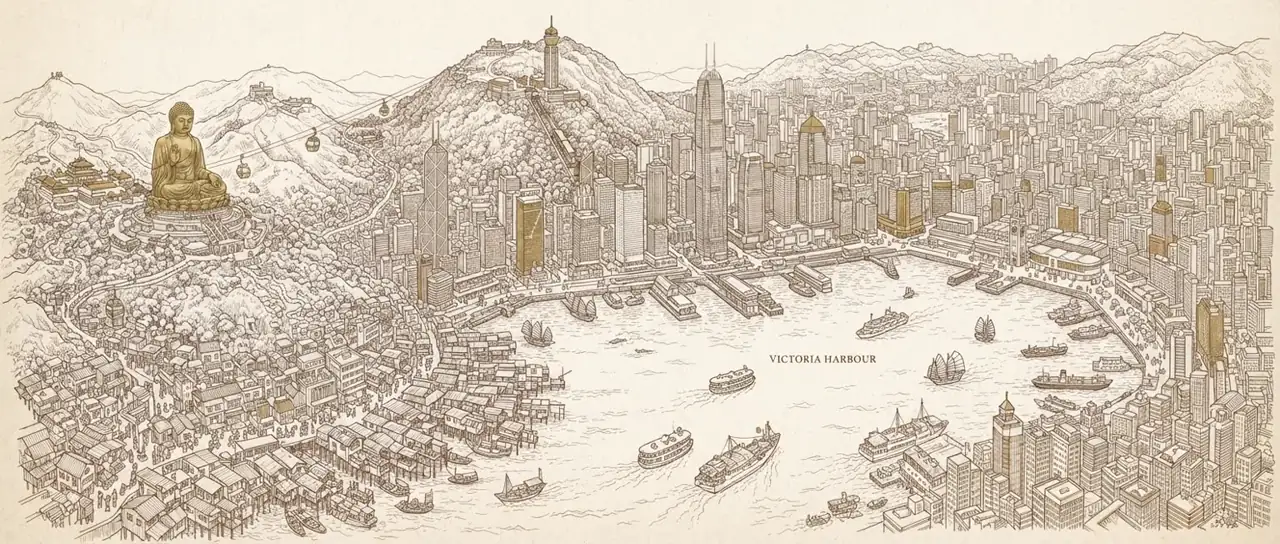
Drawn by hand for the KEY2 Hong Kong guide
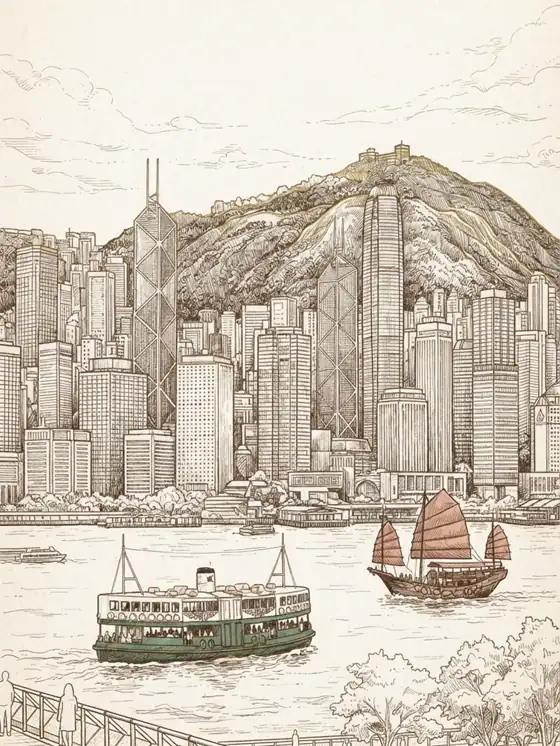

Where to stay
Hotels
The KEY2 list
Happy Hour
Daylight
Hotel Pools & Pool Clubs
Eat
Best Food

Mornings
Breakfast & Brunch

Recover
Health & Wellness
After dark
Nightlife

Arenas
Sports

Tonight
Concerts & Comedy
Say it here
Weddings
Book the room
Event Spaces

Experiences
100 Other Things To Do
Hong Kong explained
Hour-by-hour plans drawn by hand — pick one and follow it from first coffee to last call.
24 Hours in Hong Kong
A single loop from the Peak Tram to Kowloon's nightly light show.
48 Hours in Hong Kong
Two days pairing Central's dim sum and temples with a Kowloon skyline night.
Hong Kong travel guide
The practical layer: when to come, how to arrive, how to move, where to base yourself and what it costs.
Best time to visit
October through December offers the most comfortable weather — warm, dry and with the clearest skyline views — while March through May is a milder but more humid alternative before summer's heat and typhoon risk arrive.
Getting in
Hong Kong International Airport (HKG) sits on Lantau Island, about 30–45 minutes from Central. The Airport Express train reaches Central in 24 minutes for around HK$115; a taxi runs HK$300–400 depending on traffic and destination.
Getting around
The MTR subway system is fast, clean and covers almost every neighbourhood tourists visit; an Octopus card works across trains, buses, ferries and even convenience stores. The Star Ferry between Central and Tsim Sha Tsui is a cheap, scenic alternative to the harbour tunnel for crossing between the island and Kowloon.
What it costs
A mid-range hotel runs HK$1,800–3,000 a night; dinner for two at a good restaurant costs HK$600–1,000; a single MTR fare typically runs HK$5–15 depending on distance.
Where to stay
- Central
- The financial district, walkable to Soho's restaurants and Lan Kwai Fong's nightlife.
- Tsim Sha Tsui
- Kowloon-side, with the best skyline views back across the harbour and easy access to Nathan Road shopping.
- Causeway Bay
- A dense shopping and dining district on Hong Kong Island, popular with a younger, local-leaning crowd.
- Admiralty
- Quieter and business-oriented, close to Pacific Place and the Peak Tram terminus.
Traveller tips
- Buy an Octopus card on arrival at the airport; it covers MTR, buses, ferries and most convenience-store purchases.
- Ride the Star Ferry across Victoria Harbour instead of the MTR at least once — it's cheap and the best skyline view in the city.
- Book Peak Tram and Victoria Peak tickets online in advance to skip the queue at the base station.
- Many restaurants and small shops close for several days around Lunar New Year; check ahead if travelling in late January or February.
- Tipping is not customary but a 10% service charge is often already added to restaurant bills.
- Typhoon signal 8 or above suspends public transport and most business; check the Hong Kong Observatory app if travelling June through September.
The Hong Kong calendar
The dates that actually move prices, crowds and opening hours.
January–February
Lunar New Year
Fireworks over Victoria Harbour, flower markets and a citywide parade; many local shops close for several days.
March
Hong Kong Arts Festival
A month of international performances across the city's major concert halls and theatres.
April
Hong Kong International Film Festival
Screenings and premieres draw an industry crowd to Tsim Sha Tsui and Wan Chai venues.
June
Dragon Boat Festival
Races held in harbours and bays across the territory, including a well-attended event in Stanley.
October
Mid-Autumn Festival lantern displays
Victoria Park and other public spaces fill with lantern displays and mooncake stalls.
November
Hong Kong Wine & Dine Festival
A large tasting festival on the Central Harbourfront drawing local and visiting food crowds.
Seasonal highlights
- Spring (Mar–May)
- Mild and increasingly humid, with occasional fog reducing Peak visibility in early spring.
- Summer (Jun–Sep)
- Hot, very humid and the core of typhoon season; outdoor plans need a backup for signal-related closures.
- Autumn (Oct–Dec)
- The most comfortable stretch of the year — warm days, lower humidity, and the best skyline visibility.
- Winter (Jan–Feb)
- Cool and dry, coinciding with Lunar New Year celebrations and closures.
Off-peak intel
- October through December brings the year's best weather with only moderate crowds outside Golden Week.
- Avoid the first few days of Lunar New Year if you rely on small local restaurants — many close entirely.
- Weekday Peak Tram rides avoid the worst of the weekend queues; arrive before 10am for the clearest photos.
- Typhoon season (Jun–Sep) rarely disrupts a full trip, but check the signal warnings before booking outdoor harbour activities.