
Bangkok Guide
A river city of temples, market kitchens and rooftops, where the Skytrain and the ferry decide the shape of your day.
Bangkok spreads wide and flat along the Chao Phraya, so plan by transport line — BTS Skytrain, MRT subway or the river's express boats — rather than by straight-line distance. Heat and sudden downpours both reward an early start; the old city and the temples are best done before 10:00am, with air-conditioned malls and rooftop bars taking over once the afternoon sun peaks.
Share this guide
Live from Bangkok
Latest news & events
Fresh Bangkok stories and events are on the way — check back soon.
The river to Sukhumvit, end to end
Illustrated
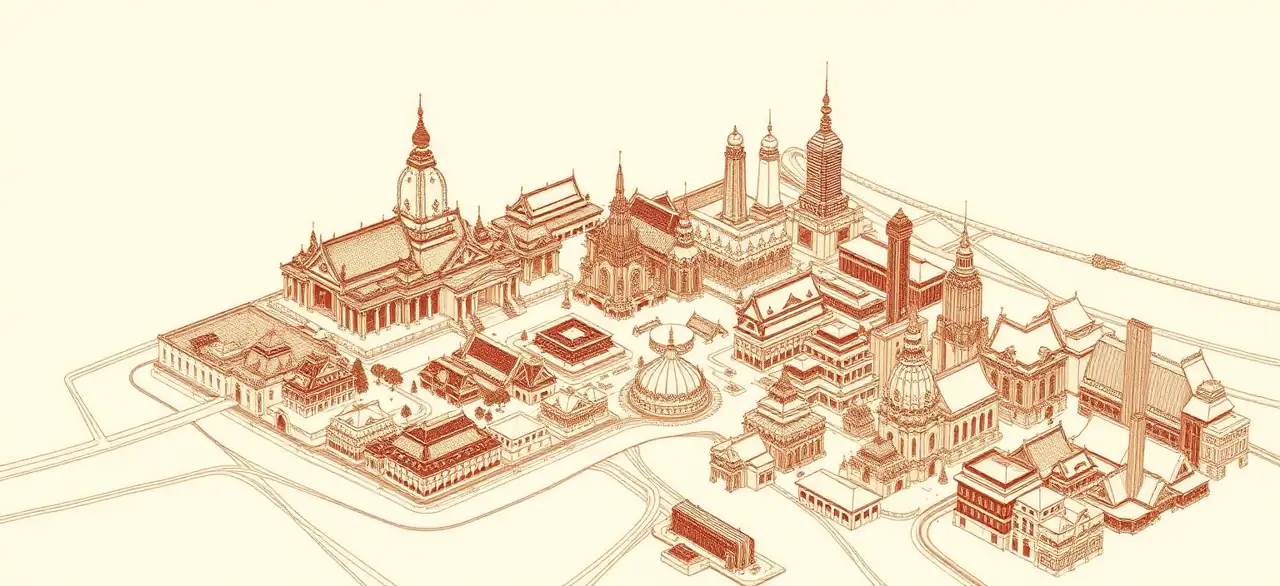
Drawn by hand for the KEY2 Bangkok guide
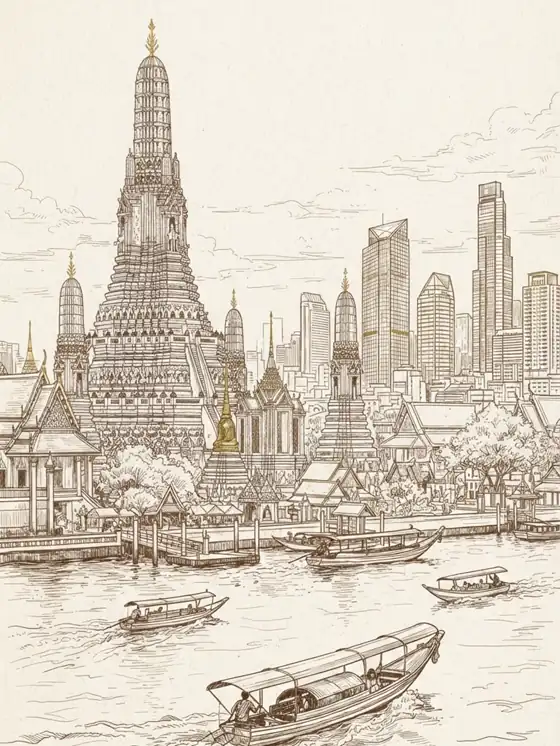

Where to stay
Hotels
The KEY2 list
Happy Hour

Daylight
Hotel Pools & Pool Clubs

Eat
Best Food

Mornings
Breakfast & Brunch

Recover
Health & Wellness
After dark
Nightlife

Arenas
Sports

Tonight
Concerts & Comedy

Say it here
Weddings

Book the room
Event Spaces

Experiences
100 Other Things To Do
Bangkok explained
Hour-by-hour plans drawn by hand — pick one and follow it from first coffee to last call.
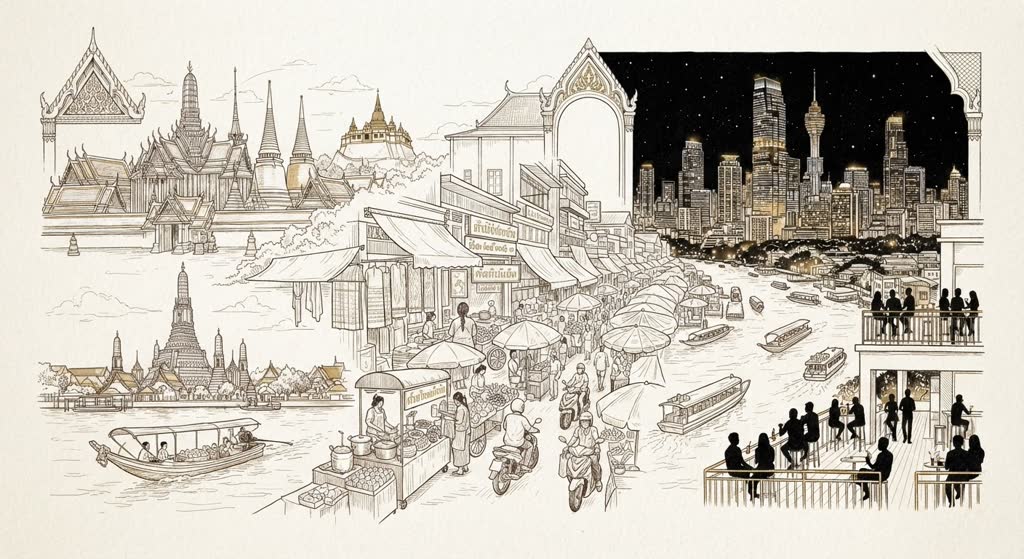
24 Hours in Bangkok
A single day crossing the river between temples, market food and a skyline nightcap.
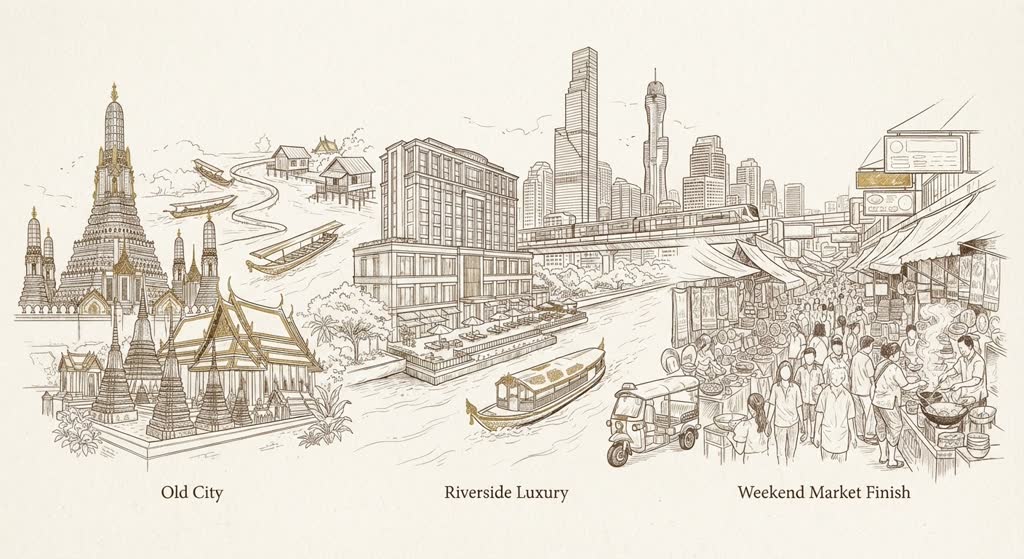
48 Hours in Bangkok
Two days balancing old-city temples, riverside luxury and a weekend market finish.
Bangkok travel guide
The practical layer: when to come, how to arrive, how to move, where to base yourself and what it costs.
Best time to visit
November to February is the coolest, driest stretch and the most comfortable for sightseeing; March to May turns intensely hot, while the rainy season from June to October brings brief, heavy afternoon downpours rather than all-day rain.
Getting in
Suvarnabhumi Airport (BKK) is around 30–45 minutes from the centre via the Airport Rail Link to Phaya Thai (about 45 minutes, THB 45) or a metered taxi (THB 300–400 plus tolls); Don Mueang (DMK), used by budget carriers, is a similar distance via taxi or the airport bus.
Getting around
The BTS Skytrain and MRT subway cover the main tourist and business districts and avoid Bangkok's notorious traffic; for areas off the lines, Grab (the regional ride-hailing app) is cheap and reliable. Tuk-tuks are more novelty than practical transport — agree a price before boarding, as meters aren't used.
What it costs
A mid-range hotel runs THB 1,800–3,500 a night; dinner for two at a good restaurant costs THB 800–1,800, far less at street food stalls; a BTS fare is THB 16–59 and a short Grab ride across town is typically THB 80–150.
Where to stay
- Sukhumvit
- Central, well-served by the BTS, with the widest choice of hotels, malls and nightlife.
- Silom / Sathorn
- Business district with good MRT access, rooftop bars and proximity to Lumpini Park.
- Rattanakosin (Old City)
- Closest to the Grand Palace and Wat Pho, quieter at night but further from the rail network.
- Riverside
- Along the Chao Phraya, good for river-view hotels and boat access to major temples.
Traveller tips
- Agree tuk-tuk and unmetered taxi fares before setting off, or insist the driver uses the meter.
- Dress modestly (shoulders and knees covered) when visiting temples such as the Grand Palace and Wat Pho.
- Tipping isn't obligatory but rounding up or leaving small change for good service is appreciated.
- Street food is generally safe from busy, high-turnover stalls; carry small notes as vendors rarely handle cards.
- Avoid drinking tap water; bottled or filtered water is cheap and widely available.
- Plugs are a mix of Type A, B, C and O, so a universal adaptor is the safest bet.
The Bangkok calendar
The dates that actually move prices, crowds and opening hours.
April
Songkran
The Thai New Year water festival, 13–15 April: entire streets become water fights, and many shops and government offices close.
May
Royal Ploughing Ceremony
A centuries-old rite at Sanam Luang marking the start of the rice-growing season, open to the public.
October–November
Vegetarian Festival & Loy Krathong
Chinatown fills with yellow-flag food stalls in October; Loy Krathong in November sends candlelit krathongs onto the river citywide.
November–February
Cool season
The most comfortable weather of the year, drawing the heaviest tourist crowds and highest hotel rates.
December
New Year countdown
CentralWorld and riverside hotels run fireworks and countdown parties; book river-view tables weeks ahead.
March
Smoky season peaks
Agricultural burning in the north raises citywide PM2.5 levels; check air quality before outdoor plans.
Seasonal highlights
- Cool season (Nov–Feb)
- 25–32°C and relatively dry — the best weeks for walking temples and rooftop dining, and the busiest for tourism.
- Hot season (Mar–May)
- Temperatures push past 35°C with high humidity; plan outdoor sightseeing for early morning only.
- Monsoon season (Jun–Oct)
- Heavy but usually short afternoon downpours; mornings are often clear and hotel rates soften.
- Smoky season (Feb–Apr)
- Seasonal burning can push air quality to unhealthy levels, mainly noticeable as regional haze rather than local smoke.
Off-peak intel
- June through October brings the lowest hotel rates of the year, in exchange for afternoon monsoon showers that usually clear within an hour.
- The BTS Skytrain and MRT subway avoid Bangkok's notorious traffic; combine them with the Chao Phraya Express Boat for riverside sights.
- Songkran (mid-April) is festive but shuts down normal business hours for several days — plan around it rather than through it.
- Book river-view hotel rooms and rooftop bar tables well ahead during December's cool, high season.